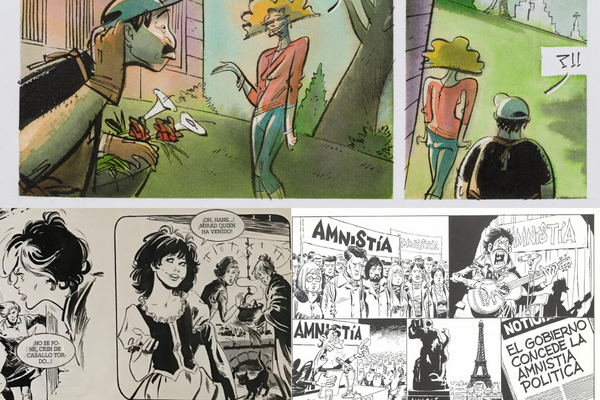
Miguel Gallardo, Alfons López, Ramon Boldú, Trini Tinturé, Cazares, Reverté, Jordi Gort, Balasch, Buil, Ermengol, Cabrejas, Ximi Comix, Josep Sàlvia or Lorena Rivega are some of the most prominent names in the history of Western comics. Names that speak of Lleida as comic territory, as a breeding ground for so-called sequential art and that have given life to mythical characters such as Makoki, Pepa or Emma and publications such as ” Callejón “, ” Algo me pica » or « Pixatinters ». It is a genre with two clear references, Miguel Gallardo and Alfons López, who despite having developed his professional career in Barcelona—a fact that was almost inevitable with the great explosion that comics had during the 80s in the Catalan capital— they have always maintained a personal link and, in the case of López, also a professional one, with the city of Lleida.

Today, Lleida maintains its desire to be a comic territory with the creation of the BAF Guerrilla Collective, specialists, screenwriters and editors such as Carles Castelló, Cecilia Hill, Mariona Visa or Jaume Barrull; and with the birth of Doble Tinta, the first collection of comics for adults in the Catalan language created in our country, by Pagès Editors.
El Morera preserves and spreads the culture of the vignette
The Modern and Contemporary Art Museum of Lleida, since 2016, has been committed to comics and graphic novels, being the first museum in Ponent, and one of the first in Spain, to incorporate them into its contemporary art collections. A desire that materializes, among other actions, with the acquisition of graphic works for his collection. The past 2022 has incorporated works by cartoonist and illustrator Trini Tinturé (Lleida, 1938), journalist and comic author Alfons López (Lleida, 1950) and one of the most representative names of the renewal of Spanish comics, Carlos Giménez (Madrid, 1941) member of the so-called Grup de la Floresta , comics professionals grouped around the figure of the publisher Josep Toutain.
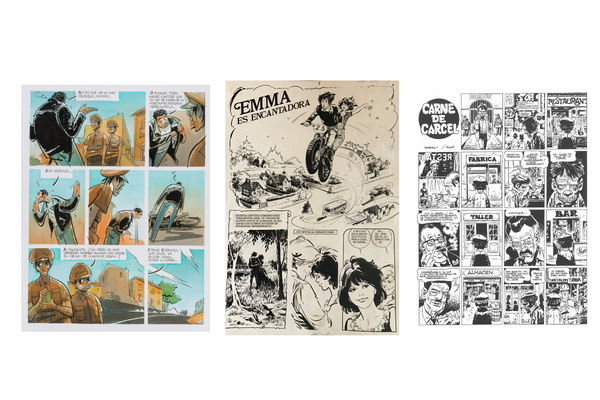
Specifically, the Morera has acquired the originals of Alfons López and Manel Fondevila’s graphic novel “La Saga de Chaves” (2004), donated by Alfons López himself; a series of originals from “Emma es encantadora” (1981) by Trini Tinturé and the comics “Rambla arriba, Rambla abajo” (1985-1986) and “España, una grande y libre” (1976-77) by Carlos Giménez , acquired and deposited in the Museum through the National Collection of Comics and Illustration of the Generalitat de Catalunya. A firm commitment that gives uniqueness to part of the Morera’s collections, and makes the Museum a leader in promoting a new look, that of comics and graphic novels, within contemporary art.